


The most common question we get from new wood cookstove owners isn’t about installation or firewood. It’s some version of “How do I keep the oven at 350 degrees?” Controlling oven temperature on a wood cookstove comes down to three things: a small, steady fire, the right wood, and knowing how your stove’s dampers route heat around the oven box. Once those click, baking on wood becomes far more predictable than most people expect.
This guide walks through how we explain it to customers who buy wood cookstoves from us, whether it’s a modern model or a restored classic.
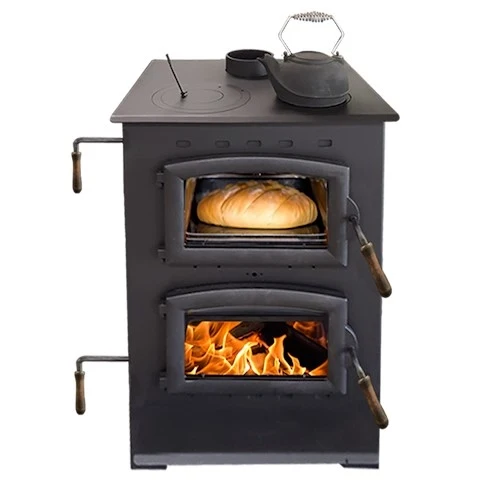
How Does a Wood Cookstove Oven Heat Up?
A wood cookstove oven is heated indirectly by hot gases flowing around the outside of the oven box, not by flame inside it. On most cookstoves, a damper (often called the oven damper or bypass damper) lets you choose between sending exhaust straight up the flue or routing it across the top, down the far side, and under the oven before it exits.
With the damper open to the flue, the stove heats the cooktop and lights easily, but the oven stays relatively cool. Close it to “oven” or “bake” position and those gases wrap the oven, which is what brings it up to temperature. Every model is laid out a little differently, so read your manual to learn which lever does what before your first bake.
Step-by-Step: Bringing the Oven to Baking Temperature
The reliable way to reach and hold baking temperature is to build a hot bed of coals first, then switch the damper to route heat around the oven and feed small amounts of wood often. Trying to heat the oven off a freshly lit, smoky fire is where most frustration starts.
- Start with the flue damper open. Light a kindling fire with the bypass open so the stove drafts well and the chimney warms up.
- Build a coal bed. Add a few small splits and let them burn down for roughly 20 to 40 minutes, depending on the stove and the weather.
- Switch to bake. Close the bypass so gases circulate around the oven. Watch for smoke at the lids or doors; if you see it, the draft isn’t established yet, so open back up and give it more time.
- Feed small and often. Add one or two thin splits every 10 to 20 minutes rather than a big load. Small fires give even heat; big loads cause spikes followed by drops.
- Use the air controls to fine-tune. Once you’re near temperature, trim the primary air slightly to slow the burn rather than letting the fire die down.
Most cookstove owners find the oven takes 30 to 60 minutes to preheat from a cold start. If you cook daily, keeping a small fire going all day means the oven is often ready with little extra effort.
Why Your Oven Temperature Swings (and How to Fix It)
Temperature swings almost always come from inconsistent fuel: wood that’s too wet, splits that are too large, or loading too much at once. Here’s what we see most often:
Wet or unseasoned wood
Wood with high moisture spends its energy boiling off water, which gives you a smoky, sluggish fire that won’t hold an oven steady. Properly dried wood matters even more in a cookstove than in a heating stove. If you’re cutting your own, our guide on how to season firewood faster covers stacking and drying methods.
Splits that are too big
Cookstove fireboxes are small. Thin splits, roughly wrist-thick or smaller, catch quickly and let you make small corrections. Large rounds smolder and make temperature hard to manage. Many owners keep a separate box of small cooking wood next to the stove just for baking.
Wood species
Softer woods like pine or poplar burn fast and hot, which is useful for a quick temperature boost. Dense hardwoods like oak or hickory give longer, steadier heat once the oven is up. A lot of experienced cooks keep a little of each on hand.
Uneven heat inside the oven
The side of the oven closest to the firebox runs hotter. Rotating pans halfway through baking is normal practice on a wood cookstove, not a sign something’s wrong.
Reading the Oven Thermometer (and When Not to Trust It)
The door thermometer on most cookstoves is a useful guide but not a precise reading of the air where your food sits. It measures the door or oven wall temperature, which can differ from the center of the oven by a noticeable margin.
We suggest placing an inexpensive standalone oven thermometer on the center rack for your first several bakes and comparing it to the door gauge. Once you know the difference on your stove, you can trust the door gauge as a reference point. Older and restored antique cookstoves sometimes have gauges that are missing or no longer accurate, so an in-oven thermometer is especially worth having there.
Frequently Asked Questions
Can you bake bread in a wood cookstove oven?
Yes. Bread is one of the most rewarding things to bake on a wood cookstove. The key is a fully preheated oven and a steady fire during the first part of the bake, when the loaf needs consistent heat to rise. Rotate the pan once so both sides brown evenly.
How long does a wood cookstove oven stay hot?
It depends on the stove’s mass and how much fuel is in the firebox, but ovens cool fairly quickly once you stop feeding the fire. For long bakes, plan to add small splits throughout rather than loading up at the start.
Does a wood cookstove need a special chimney?
A wood cookstove needs a properly sized, code-compliant chimney or listed chimney system just like any wood-burning appliance, and good draft is essential for oven performance. Clearance and venting requirements vary by model and local code, so have it installed by a qualified professional. Our installation team can help, and our guide to wood stove chimney clearance requirements covers the basics.
Getting Comfortable With Your Cookstove
Learning to control a wood cookstove oven takes a few weeks of regular use, and that’s normal. Start with forgiving recipes like casseroles and cornbread before moving on to cakes and pastries. Keep notes on how much wood and which damper settings got you to temperature, and you’ll build a feel for your stove quickly.
If you’re shopping for a cookstove or have questions about one you already own, get in touch with the Hearthwise team. We’re happy to talk through what to expect from a specific model.


